

![PhotoGrid_1455425349365[1]](https://static.wixstatic.com/media/ea6265_def1a84828d44b64a1df6c35e06c6579~mv2.jpg/v1/fill/w_889,h_889,al_c,q_85,enc_avif,quality_auto/ea6265_def1a84828d44b64a1df6c35e06c6579~mv2.jpg)


The Existence of Multi-Sensory Thresholds in Architecture
- Sep 13, 2015
- 2 min read
“One would think that architecture as a fine art works solely for the eyes. Instead, it should work primarily for the sense of mechanical motion in the human body – something to which scant attention is paid. When in dance we move according to definite rules, we experience a pleasant sensation. A similar sensation should be aroused in someone who is lead blindfolded through a well-built house. This involves the difficult and complicated doctrine of proportions which gives the building and its various parts their character.”
Richard Hill
Award winning architect Steven Holl relates Merleau-Ponty’s theory of multi-sensory intelligences to the experience of full bodily dimensions of perception in architecture, stating that architecture “speaks through the silence of perceptual phenomena.” He supports this claim by arguing that the metaphysical dialogue between one’s body, mind and space transpire from the dual interplay of one’s subjective and objective perceptions within a designed environment: where one experiences the sensation of full bodily dimensions through the senses and cognition to construct a coherent understanding of their surroundings. Pallasmaa identifies the data collected during this process as “existential knowledge” because it is accumulated through the cognitive, physical and sensory realms from intangible modes of interactions, including: space; memory; feelings; and the transparencies of time to rationalise the essence of architectural environments. In this sense, a multi-sensory engagement between the human body and architecture kindle a qualitative analysis of substance, space and scale, which are derived from the: eyes, ears, nose, skin, tongue, skeleton and muscle. This metaphysical engagement of the senses coalesce the experiences of multi-sensory thresholds in architecture, and in doing so, fortifies the experience of individuals in the world as complete embodied and spiritual beings.
Similarly, Japanese architect Tadao Ando acknowledges the existence of multi-sensory thresholds in his architecture, claiming that: “A space is never about one thing. It is a place for many senses: sights, sounds, touch, and the untouchable things that happen in between.” Through these powerful metaphysical experiences between the body: as the “locus of perception,” the mind: as the “storing and processing of sensory responses, and conscious reflection” and a designed environment, one’s sense of reality and self becomes strengthened and enriched. Italian professor, Giuliana Bruno grounds the basis for this explanation by referring to contemporary neuroscience to prove that a relationship exists between thought and touch. This is because the mental images we establish within our inner world are derived from the same neuronal paths that make up material sensory perception, essentially verifying the connection between thought and touch.39 Hence, a compelling relationship between affects and sensations and the activity of thinking has been established through scholarly research, and it has been acknowledged that these sensory experiences have an impact our understanding of reality.
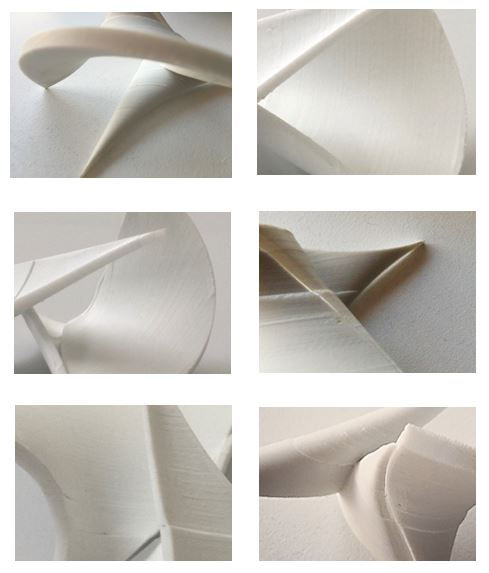
As I venture further into this exploration I find myself to be constanty reflecting on Pallasmaa's assumptions with a very abstract mindset. I am concerned about how I will be able to build the ideas that I have in my head and produce them as physical abstracts to correlate with Pallasmaa's theories of multi-sensory thresholds in architecture. Although I am scared, I am also very excited to soon share the findings of my research with you!
Stay tuned for more...!!
Catherine K


Comments