

![PhotoGrid_1455425349365[1]](https://static.wixstatic.com/media/ea6265_def1a84828d44b64a1df6c35e06c6579~mv2.jpg/v1/fill/w_889,h_889,al_c,q_85,enc_avif,quality_auto/ea6265_def1a84828d44b64a1df6c35e06c6579~mv2.jpg)


The Significance of my Research
- Oct 5, 2015
- 3 min read
“We are connected with the world through our senses. The senses are not merely passive receptors of stimuli, and the body is not only a point of viewing in the world from a central perspective. Neither is the head the sole locus of cognitive thinking, as our senses and entire bodily being directly structure, produce and store silent existential knowledge. The human body is a knowing entity. Our entire being in the world is a sensuous and knowing being, and this very sense of being is the ground of existential knowledge.”
Juhani Pallasmaa
In its purest form architecture symbolises an expression of metaphysical discourse engaged by the body and mind, and all elements within a designed environment. The concept of experiencing multi-sensory thresholds in architecture through perceptive interfaces – enabled by the cognitive, sensorial and physical domains – presents itself as a critical level of understanding when it comes to designing spaces for people to move around and spend their lives in. The intelligibility of understanding the imperative nature of multi-sensory experiences is fundamental across multi-disciplinary fields in design, where digital technologies can be used to create evocative forms as small as jewellery, and as large expressive spatial conditions in architecture. American Professor, Peter Mackeith, supports this cause, describing the eternal discipline of architecture as an expressive vocabulary that has evolved overtime, claiming that: “new technologies provide new possibilities” that intensify the rich and versatile experiences of designed environments. In this way, the embodied knowledge residing within each artefact that was generated in this process is revealed through the subjective interpretation of haptic interactions by those who engage with them. This materialisation of phenomenological concepts presents itself as a sophisticated level of understanding the existence of hapticity is architecture, and demonstrates how these experiences can be elicited through digitally derived forms.
Understanding the significance of multi-sensory thresholds in architecture authenticates the nature of designing more holistic spaces of embodied interactions between people and architecture, where a transformative interaction between the body and space transpire. These encounters generate an evocative platform of sensual appreciation for individuals and their environments through perceptive interfaces enabled by the cognitive, sensorial and physical domains. This concept of experiencing multi-sensory thresholds in architecture presents itself as a critical level of understanding when it comes to designing spaces for people to move around and spend their lives in. This is because in its most purest form architecture symbolises an expression of metaphysical discourse engaged by the body and mind with all elements within a designed environment. The subjective experiences embodied by individuals within these conditions therefore mirror the essence of holistic design in architecture. This powerful communication liberated by the projections of subjective experiences are emulated by the way in which people live their lives.
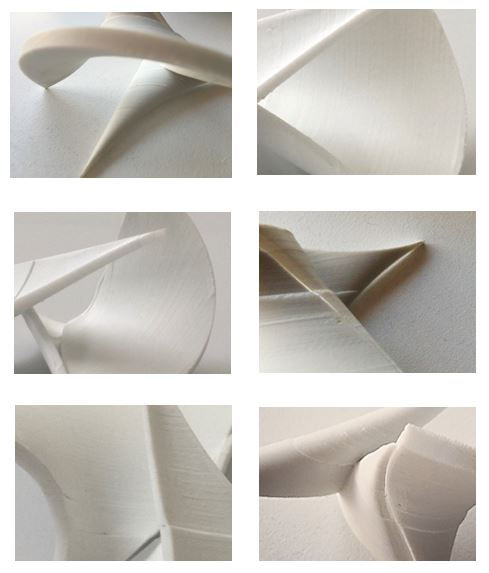
My honours research project will contribute to the applied and pedagogical domains of knowledge by raising awareness of the value of meaning embodied within digitally derived designs. Although the pool of knowledge substantiating the existence of multi-sensory thresholds remains shallow, this study aims to raise awareness, and encourage further creative practices to incite expeditions to expand the body of knowledge in this domain. An appreciation for the phenomenology of space in designed environments can lead to new and exciting movements in design that exploit the capacities of the progressive developments in digital technologies. For the purpose of this investigation my modes will be produced in the form of sculptural artefacts, however they represent the possibilities of what the digital technologies of our time can produce, and the link they can draw between spatial phenomena and the individuals subjective experience of architecture.
Please continue the discussion on my other accounts, or for more information contact me directly...
Catherine K


Comments