

![PhotoGrid_1455425349365[1]](https://static.wixstatic.com/media/ea6265_def1a84828d44b64a1df6c35e06c6579~mv2.jpg/v1/fill/w_889,h_889,al_c,q_85,enc_avif,quality_auto/ea6265_def1a84828d44b64a1df6c35e06c6579~mv2.jpg)


Methodological Processes - Experiment and Practice
- Oct 22, 2015
- 3 min read
“… The act of designing draws in the designer; the process ‘takes over’. And the designer loses him or herself in what is going on. The activity of designing absorbs the designer and dominates his or her consciousness, so that s/he is not aware of the design rules but only of designing. The designer’s involvement in the design process breaks down the separation of the subject and the object demanded by the epistemic concepts of design rules.”
Adrian Snodgrass and Richard Coyne
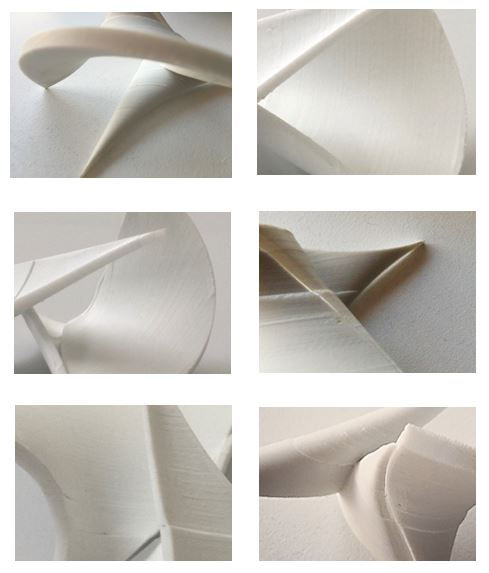
During the ‘Experiment’ process, Webb encourages unconventional forms of research to be undertaken to achieve the most desirable results with respect to the knowledge that is being pursued. Therefore experimenting with digital technologies, and presenting the findings of this research through digitally fabricated artefacts was the most appropriate form of methodology to implement in order to achieve the objective of my research goal: which was to develop a link between digitally fabricated architecture, and sensory experiences conditioned through the body and mind. In this way, I was able to experiment with digital technologies, including: the CNC milling, laser cutting, and 3D printing machines, to produce a collection of artefacts. These artefacts were designed with the potential to elicit multi-sensory responses correlating to a series of assumptions substantiating the theory of multi-sensory thresholds in architecture made by Pallasmaa in: ‘The Eyes of the Skin: Architecture and the Senses.’
The ‘Practice’ process developed over the course of this investigation, and involved the exploration of design ideas through iterative design cycles. This included the fabrications of sketch models to be made out of various materials and at reduced sizes to be used as progressive developments leading towards the final design solutions. According to Webb, these iterative design cycles facilitate an intelligible platform of inquiry for the researcher to immerse themselves within the creative practice of their research by virtue of continuously making, manipulating and absorbing the essence of the process.
I applied a kineasthetic combination of action and thought as a method of research to draw final design solutions for the production of each digitally fabricated artefact during its conceptualisation and manufacturing stages. The artefacts derived from this process, according to internationally renowned architect Frank Gehry, encompass an extended depth of knowledge beyond their representational values: as the thinking of researcher is interpreted through physical impressions, thus becoming the knowledge embedded within the artefact. Hence, a phenomenological understanding of the human condition is enhanced through the haptic engagements between an individual and the digitally derived artefacts as each model induces the awareness of a heightened sensory experience by virtue of its design and intent. In this way, an individual’s understanding of spatial phenomena is enlightened through their interactions with these models. American Professor of architecture, Jeremy Ficca, articulates this form of creative inquiry as the “systematised process of integrated learning through making.”
In this manner, the practical component of this research project has embraced the principles of an arts-informed research approach as the underlying intention of the study was to “enhance the understanding of the human condition” through experimental investigations. As a result the digitally fabricated artefacts produced in these investigations emerge as representations of scholarly inquiry through qualitative research in the creative arts. The following chapters reveal the essence of each mini-research investigation that was conducted during this experiment.
...Please follow my other accounts for more information on this exciting discussion!!
Catherine K


Comments